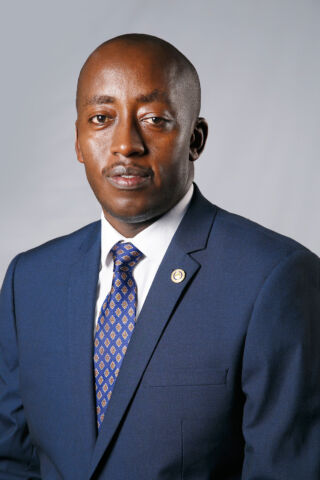
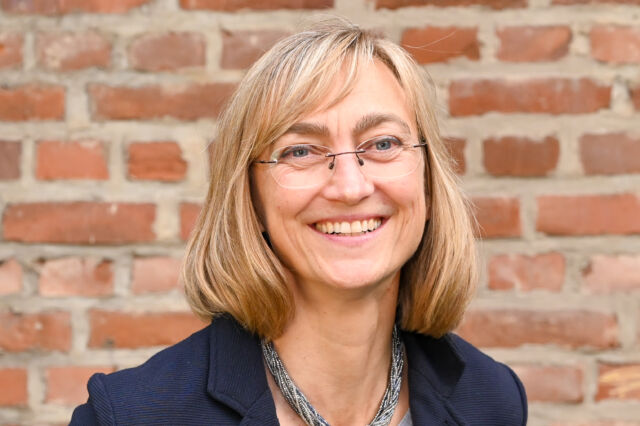
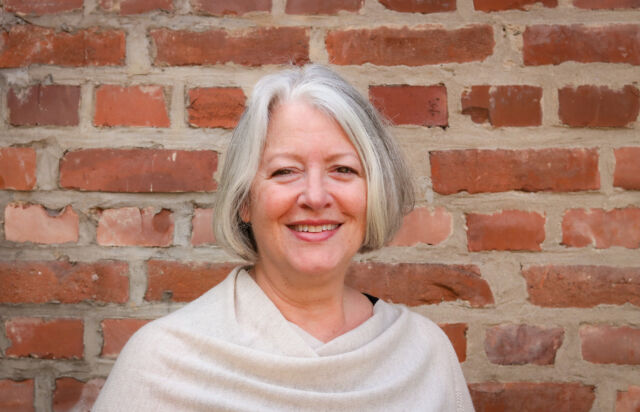
Olivier Laboulle
Global Head of Sustainability – Coffee / Group Human and Labor Rights Lead, Louis Dreyfus Company
COFFEE EXPERIENCE AND SKILLS
My experience with coffee sustainability began 20 years ago when, as a student with a limited budget, I started to buy Fairtrade coffee, understanding that my personal buying behavior could make a difference.
Since 2020, I have been working as Global Head of Sustainability for Coffee at Louis Dreyfus Company. In this role, I oversee the implementation of our non-deforestation commitment, compliance with EUDR, the production of responsibly sourced coffee and the roll-out of LDC’s new farmer support programme called Stronger Coffee Initiative, among other. Since 2023, I am also responsible for Human and Labor Rights in supply chains for the whole Group.
I have dedicated my career to sustainability, specifically focusing on agricultural supply chains and supporting cocoa and coffee smallholder farmers for the past 8 years.
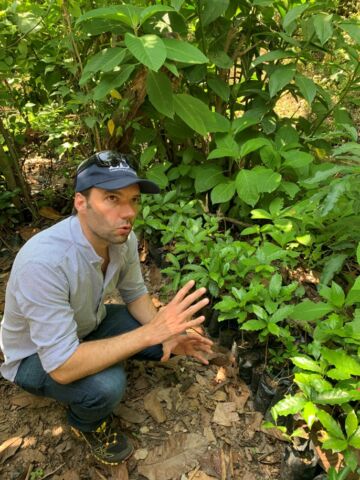
Having extensive experience working for NGOs and UN Organizations reliant on third-party funding, I have had a lot of exposure to various types of donors, bilateral, multi-lateral and private. I worked for five years at the International Cocoa Initiative and participated in the organization and successful conduct of a dozen board meetings. I have had the opportunity to visit dozens of coffee and cocoa/coffee (mixed) farms over the years but I also build my expertise through the feedback from our team of coffee sustainability managers, agronomists and technicians deployed in coffee origins. Nevertheless, I still have more to learn, and different origins to visit in order to better appreciate the differences in production models. Over the years, I have worked or advised on fisheries, bananas, cocoa, vanilla, etc. and therefore can rely on a wide array of experiences to advise the GCP. I have a Masters’ Degree on Human Rights and 8 years’ experience working on child and forced labour, living income, gender equity, education, community development, etc. in the cocoa, coffee and fisheries sector. I serve as LDC’s Lead on Human and Labor Rights in supply chains.
INVOLVEMENT WITH GCP AND / OR OTHER SUSTAINABILITY ORGANIZATIONS
When I joined LDC as Global Head of Sustainability for Coffee, one of my first decisions was to join the GCP. Having worked as Head of Programmes for the International Cocoa Initiative, (a leading multi-stakeholder cocoa sector initiate), I am a firm believer in the importance of pre-competitive collaboration for sustainability. Since LDC joined in 2021, I have been representing LDC at the GCP, actively participating in webinars, taking part in strategic consultations, and advising on EM and Global Common Code reviews. In my current role, I also represent LDC in the Sustainable Coffee Challenge (SCC), the sustainability committee of the European Coffee Federation (ECF), the German Coffee Association (DKV) in the technical working groups of the ICO Public Private Task Force, the ILO Child Labor Platform and the Swiss Sustainable Coffee Initiative (SSCI). Together with a few of LDC’s competitors, I contributed to the co-design of www.tract.eco, a transformative sustainability performance measurement platform with common methodologies and metrics.
HOW WILL YOU SUPPORT GCP’S WORK AND GOAL?
GCP recently adopted its 2.0 strategy with a bold commitment to deliver transformational change for 1 million coffee farmers by 2030. I participated in the consultations for its development and endorsed the strategy during the General Assembly in December 2021 so I intend to support its implementation as it is important to ensure institutional continuity.
The challenges facing the sector have already evolved since 2021 and below are the areas which I specifically would like to support:
1. Promote pre-competitive collaboration in origin to ensure local actors are supported collectively to meet the upcoming EU Regulation on Deforestation-free Products.
2. Ensure greater alignment between all sustainability-related pre-competitive forums (SSCI, DKV, ECF, SCC, ICO, etc.) to limit the sector’s time spent on coordination and maximize the time spent on generating impact for the 1 million coffee farmers targeted by the GCP 2.0 strategy.
3. The Equivalence Mechanism v2.0 has created a credible level-playing field and prevents a race to the bottom. As a board member, I would promote it and make sure it stays relevant in the face of EUDR and other changes in the sector.
4. Following the adage “what is not measured, cannot be improved”, GCP’s work on Collective Reporting and the data framework is critical to make sure we, as a sector, can track our progress and hold ourselves accountable against our objectives. Linking to initiatives such as DIASCA and TRACT is important in this context.
WHAT IS YOUR VISION FOR A SUSTAINABLE COFFEE SECTOR?
I see sustainability as a model of production and consumption that is financially profitable for all value chain participants, while restoring ecosystems, avoiding human rights violations and supporting communities to thrive. As part of a pre-competitive collaboration with JDE, IDH – The Sustainable Trade Initiative, ACOM, Mascopex, Simexco, and GCP, LDC contributed to a study that showed that highly diversified farms could become net carbon sinks rather than emitters of Greenhouse Gases (GHG). Imagine if each cup of coffee consumed around the world was actively contributing to the fight against climate change and yield a premium for the farmers! This could be truly sustainable.